
Introduction to Korean Hand Acupuncture and Moxibustion
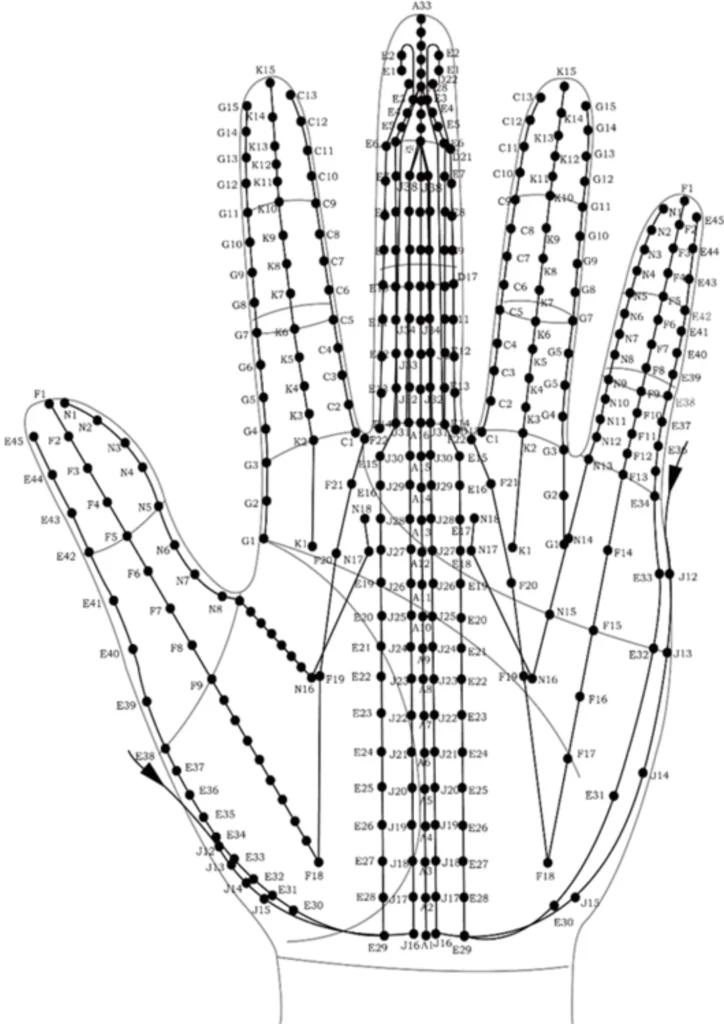
What is Korean Hand Acupuncture and Moxibustion? Korean Hand Acupuncture and Moxibustion, also known as Korean Hand Therapy or KHT, is a versatile and potent acupuncture microsystem that was discovered by the Korean acupuncturist Dr Tae Woo Yoo. Its well-defined theories and principles in diagnosis and various holistic tailored treatments enable KHT to perform the same potential functions as whole-body acupuncture (Park et al., 2012: 27-37). This modern acupuncture microsystem is simple to learn and safe to perform as it has minimal side effects. It offers both invasive and non-invasive treatment options with minimum pain or discomfort (pressure with a probe or use of acupressure discs) for maximum treatment effect. KHT theorises that the hands reflect the anatomy and physiology of the whole body, furthermore all the functions of the internal organs and tissues can be controlled by gentle stimulation of their corresponding points and areas on the hands for prevention, management, and treatment of various diseases. KHT is theoretically unique and philosophically more profound than other micro systems; the precise mapping of corresponding body and organ parts, 404 reflex points and 14 micro-meridians on the hands allows the application of almost all aspects of body acupuncture theories (Jodorkovsky, 1999:25). (Figure 1) KHT Correspondence Theory (Figure 2) KHT Micro Meridians on the Hand Possible mechanisms underlying KHT The close link between the hands and the brain through the large territories associated with the hand in the motor cortex and sensory cortex of the brain suggest the important role of the hands in controlling all functions of the body. The stimulation of the hand points and areas, according to KHT theories, can modulate the autonomic nervous system by reducing or suppressing over-exited sympathetic nerves, thus restoring a balance between the sympathetic and parasympathetic nervous systems. This is due to the presence of a large number of sympathetic nerve fibres condensely distributed on the hands with around the same amount as is found on whole of the human body (Yoo, 2009:58) The advantages of KHT over other micro-systems Micro acupuncture systems[1] are special systems of acupuncture that are based on stimulating specific points on specific areas of the human body to treat prevent, manage and treat diseases. Each of the points and areas reflects information of the body as a whole. There are other hand micro systems originating from different times, countries and areas. Although they share some concepts, different hand micro systems show the reflected organs in remarkably different places (Dale, 1990:141-162; Wang, 2009:1). In a clinical setting, KHT may combine with other treatment or therapies in four ways: effectively, simultaneously, alternatively and alternately (Dale, 1990:141-162; Jung, H J and Park, S Y, 2013:215-24). It is also useful for people to learn simple treatment appropriate to them and use this to assist themselves between treatments at the clinic. KHT treatments are very safe procedures and the most of them are non-invasive. Thus the discomfort of treatment is minimised. It is an ideal treatment option for children, elderly, disabled and people who are nervous about the needles (Kobrin, 2000:29-30). Diagnosis and treatment The focus of diagnosis in KHT is to find the fundamental root organ which is most out-of-balance and is at the root of the presenting symptoms. It could be one of 12 internal organs. It is essential to diagnose the fundamental root of the problem in addition to the branches (Eckman, 1990:1-6). KHT pulse diagnosis (Yin Yang pulse diagnosis) and the classification of postnatal constitutions are used as the foundation of all diagnosis to find the fundamental root or organ. Firstly, by identifying which postnatal constitution the patient has, through a special examination which primarily focuses on abdominal palpation, once constitutions are determined, then by identifying which organ within that constitution is the ‘root organ’ and whether the organ is in a state of excess, deficiency, hot and cold through KHT pulse diagnosis. KHT treatment corrects imbalances in the functioning of the internal organs where the organs are impacting on one another after an imbalance has occurred in the root organ (Kobrin, 1990:5-16). [1] The most widely used micro acupuncture systems are hand acupuncture, ear acupuncture, foot acupuncture, scalp acupuncture, abdominal acupuncture, wrist and ankle acupuncture, and face acupuncture. KHT pulse diagnosis KHT pulse diagnosis was mentioned in the Huangdi Neijing[1] repeatedly in various ways over many chapters. It has not been utilised in clinical settings for a long time because of its vague and poor explanation. Dr Yoo recognised the usefulness of the KHT pulse diagnosis to discern abnormalities of the internal organs by comparing the ratio of the widths and sizes of the radial and carotid pulses (Yoo, 1993:255-322). KHT pulse diagnosis is also utilised to discover how severe the symptoms or diseases are, to measure changes indicating improvement after treatment and to evaluate how the patient’s symptoms or diseases have changed or evolved. The pulses of the common carotid arteries are palpated at St9. The pulses of the vertebral arteries cannot be easily palpated directly from the arteries because they are circulating deeper inside the body. Therefore, the condition of the radial pulse at Lu9 is used as a proxy for the vertebral artery since both the vertebral and radial arteries have the same origin at the subclavian artery. According to KHT theory, the left and right-sided carotid and radial pulses should have a regular and equal blood flow, indicating a balanced flow to the brain and good circulation of blood and normal function of the internal organs. Therefore the purpose of treatment when the pulses are unbalanced is to regain normal balance throughout the body. This is similar to traditional acupuncture, which attempts to achieve this balance and improve health by promoting harmonious flow of Qi in the acupuncture meridians. Park and Yoo have demonstrated that an imbalance in the cerebral blood flow in the carotid arteries and vertebral arteries can be altered in a controlled manner with KHT. A 56 year old male patient with Parkinson’s disease had a silver acupressure disc applied on