
Healthy Blood Lipids: Some Key Nutritional Supplements To Consider
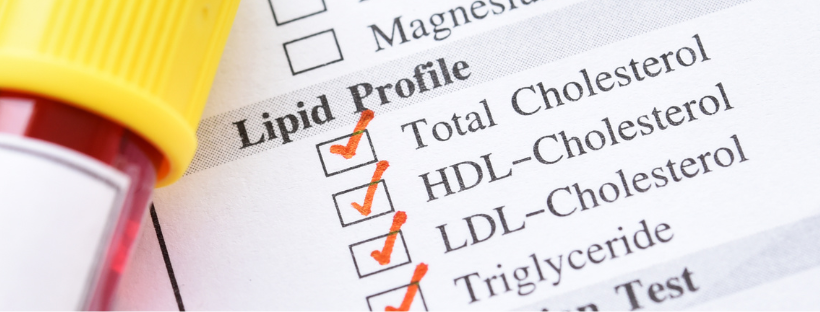
Like most healthcare practitioners, you may see patients concerned about elevated levels of blood fats (namely cholesterol and/or triglycerides), especially if their attention has been drawn to this from a recent test result. If you’re considering options to support these patients, you may find this article interesting, because it summarises the evidence for some commonly prescribed nutritional supplements for such individuals, in order to complement the medical interventions prescribed by the GP or lipidologist. Here’s what a healthy serum lipid panel looks like (NHS reference ranges in mmol/L, 2022): Cholesterol is, of course, a vitally important molecule for cell membrane function, steroid synthesis, bile production and nervous system health. The liver makes LDL-c to carry the cholesterol around the body in order to perform these important roles; and after completion, the cholesterol is transferred to HDL-c to return it to the liver for excretion (see fig. 1). Note that other lipid-related particles are also considered important predictors of cardiovascular disease (CVD) risk, in particular the level of lipoprotein (a) – Lp(a) – and the ratio of apolipoprotein B to A-1 (The Apo B/Apo A-1 ratio[i]). These are not covered here because they are not typically measured by GPs and so they will less often be seen in practice. [i] Apolipoproteins are surface proteins involved in lipoprotein metabolism, Apo B being found on the surface of all atherogenic lipoprotein particles – VLDL and all LDL sub-fractions, and Apo A-1 being found on HDL particles, which are anti-atherogenic because they carry cholesterol back to the liver. Elevated cholesterol per se may not be damaging to health, providing there is sufficient HDL-c in circulation to carry the cholesterol from LDL-c back to the liver before it has a chance to oxidise and cause damage to arteries. Damage to arteries can lead to heart attacks, strokes and other cardiovascular (CV) issues. Hence the pattern of the relative blood lipids (such as the TC:HDL-c ratio) is more important than simply the level of TC (see Figure 1). Figure 1: The process of cholesterol transport: Triglycerides from dietary fats and sugars are transported to the liver, where they are packaged, together with cholesterol, into LDL-c for transport around the body through the blood stream. After the cholesterol has fulfilled its role, it is transferred to HDL-c, which transports it back to the liver for excretion via bile. Dietary supplements to consider Here’s a selection of key nutritional supplements worth considering if your patient needs more than diet and lifestyle to support a healthy pattern of blood lipids. Note that diet and lifestyle are not covered in this article, because there is a plethora of information elsewhere on these crucial inputs for managing blood fats. Suffice it to say that a wholefoods, low glycaemic load, Mediterranean-style diet, high in brightly coloured plant foods, olive oil, oily fish, pulses and nuts/seeds is a good starting point; together with moves towards optimising sleep, physical activity, stress, a sense of purpose and good connections with people and with nature. EPA + DHA Despite some studies reporting null findings, a sizeable body of evidence suggests that blood levels of the long-chain omega-3 fatty acids EPA and DHA (from fish oil) are inversely related to the risk of total mortality and fatal CVD events.(1) In terms of blood lipids, a systematic review of 18 studies reported that using EPA/DHA at more than 2g/day lowered TG concentration (with DHA having a greater effect), increased HDL-c and, although there was no reduction in LDL-c, increased LDL particle size, making the LDL-c less atherogenic.(3) Specific mechanisms of EPA and DHA in blood lipid health include inhibiting hepatic synthesis of triglycerides, increasing LDL’s resistance to oxidation, and supporting the functioning of LDL-c membrane receptors.(4) In fact, these fatty acids can be so effective that prescription formulations are approved in the US for the treatment of adults with severe hypertriglyceridemia.(5) Dosages used in studies typically range from 0.5-1.8g/day, although higher dosages of 3-4g/day have been required for reducing elevated triglycerides. Increasingly, evidence is pointing towards aiming for a specific ‘Omega-3 index’ as being more useful than a ‘one-size-fits-all’ dosing approach. This requires determining the daily dosage according to the baseline status of cell membrane EPA and DHA for the individual. Studies suggest that individuals with more than 8% of their red cell membrane fatty acids comprising EPA and DHA may have a 90% lower risk of sudden cardiac death compared to individuals with an ‘index’ of less than 4%. It’s also worth knowing that the current European average is less than 4% and that a study of 3,500 people found that those at the optimal 8% and above were not only eating oily fish but were also supplementing EPA and DHA. The conclusion was so strong that the researchers went as far as recommending that the need for supplementation for most people should be reflected in institutional guidelines.(6) CoQ10 Coenzyme Q10 is essential for the mitochondrial production of ATP, especially in busy organs like the liver and the heart. Although CoQ10 is an endogenous compound, the liver’s ability to synthesise it tends to reduce with age, such that by the age of 40, the heart typically gets less than 70% of the Q10 it was getting at the age of 20. There are many mechanisms by which supplemental Q10 may reduce the risk of CVD (such as modulating blood pressure and blood glucose control and inflammation) and in particular by supporting healthy blood lipids. For example, studies have reported Q10 to: In human trials, Q10 has been shown to improve blood lipids. However, the specific lipid changes tend to be variable between different types of cohorts and different Q10 preparations and dosages. For example: It’s also worthwhile considering Q10 supplementation in individuals taking statin medication. This is because statins work by interrupting the hepatic mevalonate pathway. This pathway is responsible for both cholesterol and Q10 production, so interrupting it can result in a significant reduction in Q10.(9) Most CoQ10 supplements are difficult to absorb because the molecule is